FISH CALL CHARTERS
---Guiding Charleston's Waters Since
1996---
Celebrating 25 years of business!! Oct 2021
Fly Fishing Page
Text me to book a trip
843-509-7337 (REDS)
South Carolina offers flyfishing clients many year round
opportunities, but most of our flyfishing centers around redfish.
Redfish have a reputation as easy dumb targets in some areas but not in
South Carolina. Our redfish feed mostly by scent so fooling them with a
fly can be tough some days. Other days they will act like they have
never seen a boat and eat just about everything you throw at them. Those
days are fewer and further between with the increased fishing pressure
of the last few years. We can catch reds on the fly just about any time
of the year but concentrate most of our flyfishing efforts into two
seasons; tailing redfish of the Summer and schooling redfish of the
Winter. It is very important in flyfishing to be able to see your
target, and these two seasons offer great sight casting., In the Winter
months, the redfish gather into huge schools, and prowl the shallow
water flats. The cold temperatures kill off the bacteria and algea
making the water very clear so sightcasting is at its best. We pole the
flats hunting in my skinny water boat for these schools of redfish, and
it is not uncommon to find schools of 200-500 hungry fish. These Winter
fish are much slower due to low water temps so we can typically get lots
of shots at them. The Summer months also offer excellent flyfishing for
redfish. These trips are centered around the higher than normal tides
from April through October (Charleston's Summer). During these high
tides, the fish will move deep into the spartina grass to feed on
crustaceans. As the fish noses down to suck a crab from the mub, its'
tail breaks the surface of the water giving us a fly shot to a feeding
fish. This takes an accurate cast because the fish is very intent on
getting that crab. Many times we will find 15 or 20 fish tailing in a
single flat. Many anglers find this to be the most exciting fishing
there is! Most of the time, we will pole the flats looking for tails and
feeding fish, but sometimes we leave the boat to chase the fish on foot.
These tides occur on very specific dates and only last a few hours so
you must plan early if you want to fish one of these tailing tides.
Flyfishing for reds can also be great during the spring and fall months
if conditions allow for sightcasting.
Clear water and schooling reds, perfect
sightcasting! | 
Beautiful Winter conditions for the fly | 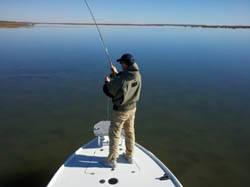
Frigid
and flat calm | 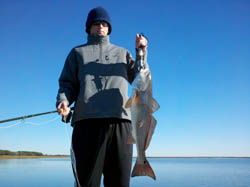
Another cold water redfish comes to the Fish
Call |

Tailing
redfish of the warmer months | 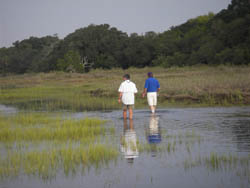
Sometimes we take chase on
foot | 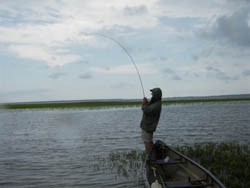
Hooked up in the rain! | 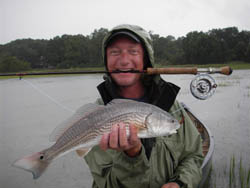
Average
size tailing redfish, 5 pounds |
Trout and flounder are other
possible year round targets for flyfishermen. Trout are sight feeders
and readily take many different types of flies. Their size is not huge
and they don't pull very hard but trout still can be a blast on light
gear. We may also run into black drum, sheepshead, and flounder on the
flats. We do not specifically target these species on fly, but do catch
them from time to time when fishing for reds and trout. The fall and
spring months are best for trout and flounder.
The migratory species also make
great flyfishing targets. We find spanish mackerel and bluefish busting
the surface around the Charleston Harbor, the surrounding inlets, and a
few miles offshore. These are the easiest of species to catch on the
fly. Sometimes they will take the fly right next to the boat. Even
though they are easy, they still pull great! Ladyfish are incredibly fun
on the fly. They also can be found smashing bait through out our
estuary. Ladyfish are cousins of the mighty tarpon and act very much the
same. They make lightning fast runs and jump like crazy. They also love
poppers which makes for some exciting fishing! Some years we have tons
of ladyfish and other years they are scarce. The biggest and toughest
inshore species to tackle on the fly is the jack crevalle. These fish
average around 20 pounds but get much larger. A new 20lb-tippet world
record fish of just under 40 pounds was caught in the Charleston Harbor
in 1999. These fish are also found busting the surface and love poppers!
We have seen fewer and fewer jack crevalle in the harbor the last couple
of years so don't recommend only targeting them. We have found a great
fly bite on another jack though, the always mean amberjack! In the
Spring and early Summer, amberjacks, cobia, and barracuda stack up in
the shipping channel and offshore wrecks. These fish are range from
15-50 pounds and pull really hard. We chum them into a frenzy on the
surface and then cast flies into the feed. I recommend big flies and at
least a 10 weight for these fish. Client with a broken 9 weight pictured
below. Conditions need to be flat because we target these fish 5-10
miles offsore. This fishing is not for the faint of heart.
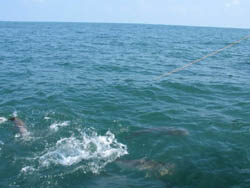
THE BITE!
with amberjacks busting all around | 
THE FIGHT! nervous
about that rod? | 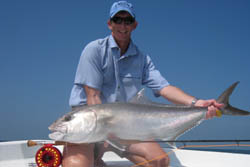
THE PRIZE!! 30+ pound
amberjack | 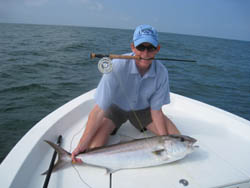
This AJ made quick work of his 9 weight rod |
For the most part, a 7 to 9
weight rod with weight-forward floating line will handle everything
except the giant jacks and cobia. For the big guys, I like a 12 weight
rod and a reel with at least 200 yards of backing. A 10 weight would
make it real sporty though. Fish Call will provide all the flies needed,
but if you have something special, bring it along. Clients are
encouraged to bring their own equipment, but can use mine if needed. I
have a 7, 8, 9, 12, and 14 weight rods with weight-forward floating
line. I normally tell flyfishing clients that they need to be able to
cast 30 to 50 feet accurately in two false casts to be successful
without getting lucky. On calms days, you may need 60-80 feet to get to
the redfish without spooking them. The trick with saltwater flyfishing
is learning how to shoot the line. Most of the time we will see a fish
and have about 15 seconds to get the fly to him so as few false casts as
possible. Flyfishing in Charleston can be very challenging but the
reward is great.
To book a
charter
call or text
843-509-7337 or
email jrwaits@fishcall.com

Wade Fishing for Tailing
Reds | 
Pictures by
Frank Edwards for Charleston Magazine | 
I Love It When A Plan Comes
Together! |
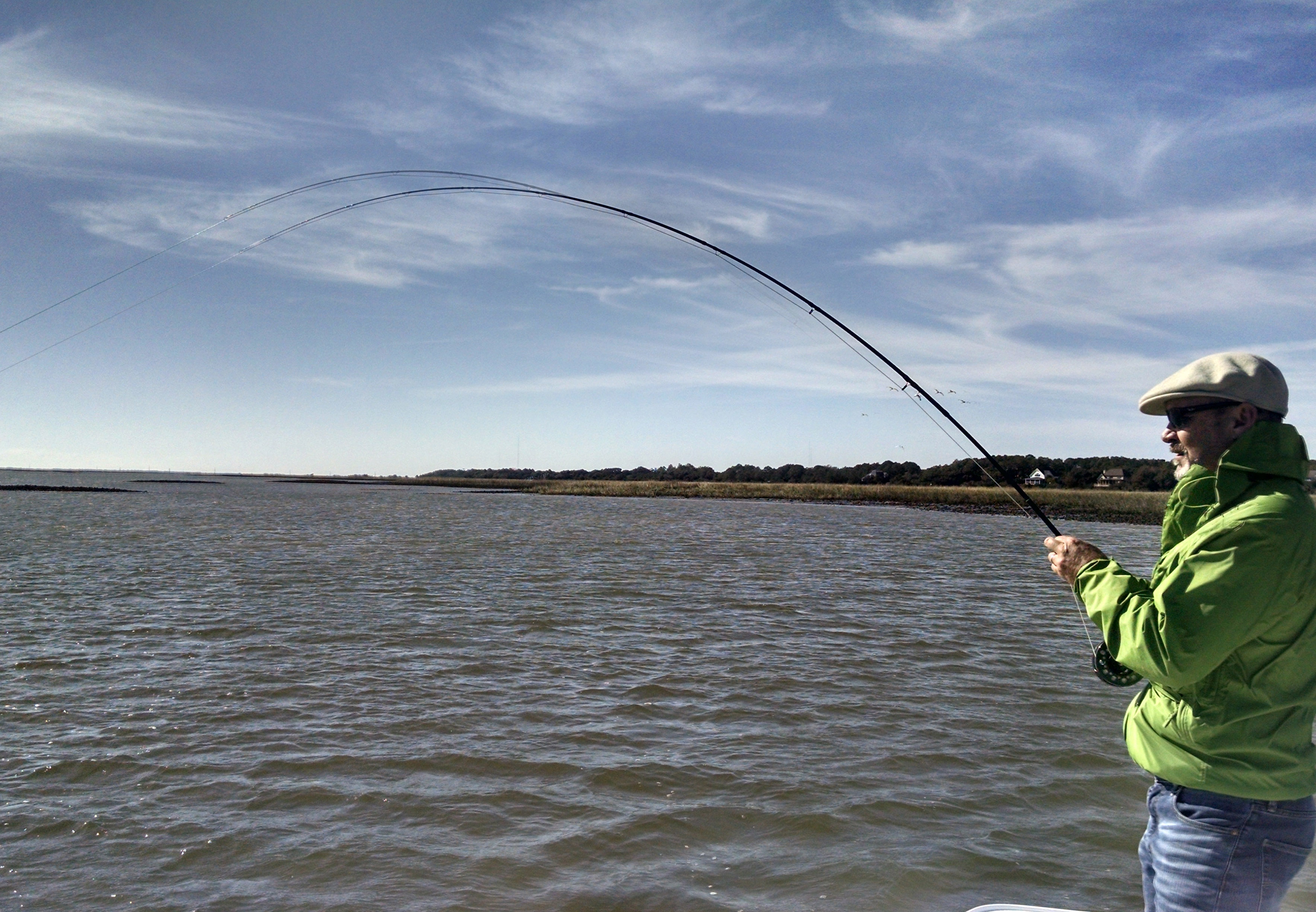
Blind
casting can also be productive | 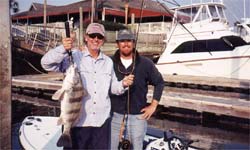
Black Drum on the Fly!! | 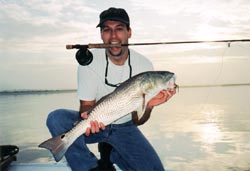
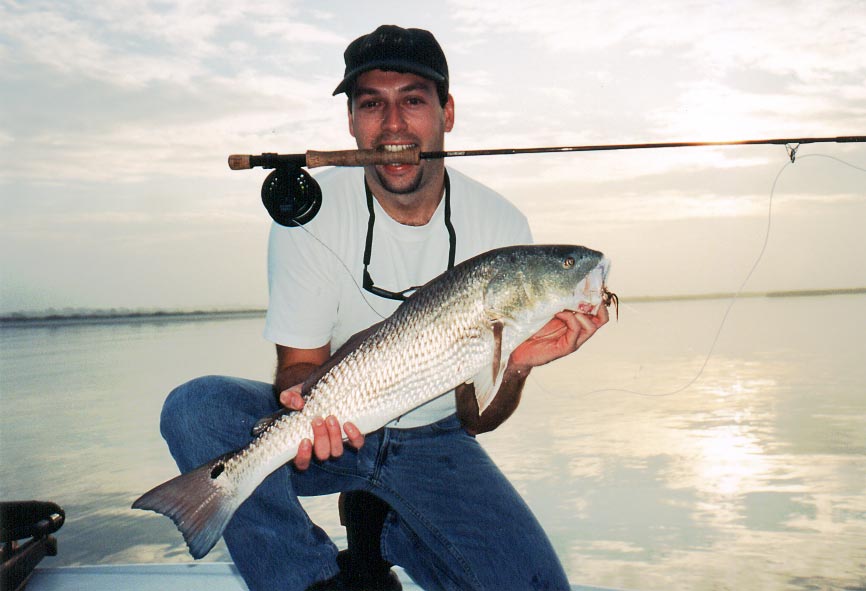
Sunrise redfish | 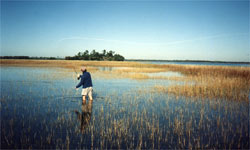
Casting to tailing redfish |

Winter time
redfishing!! | 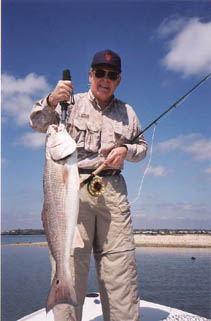
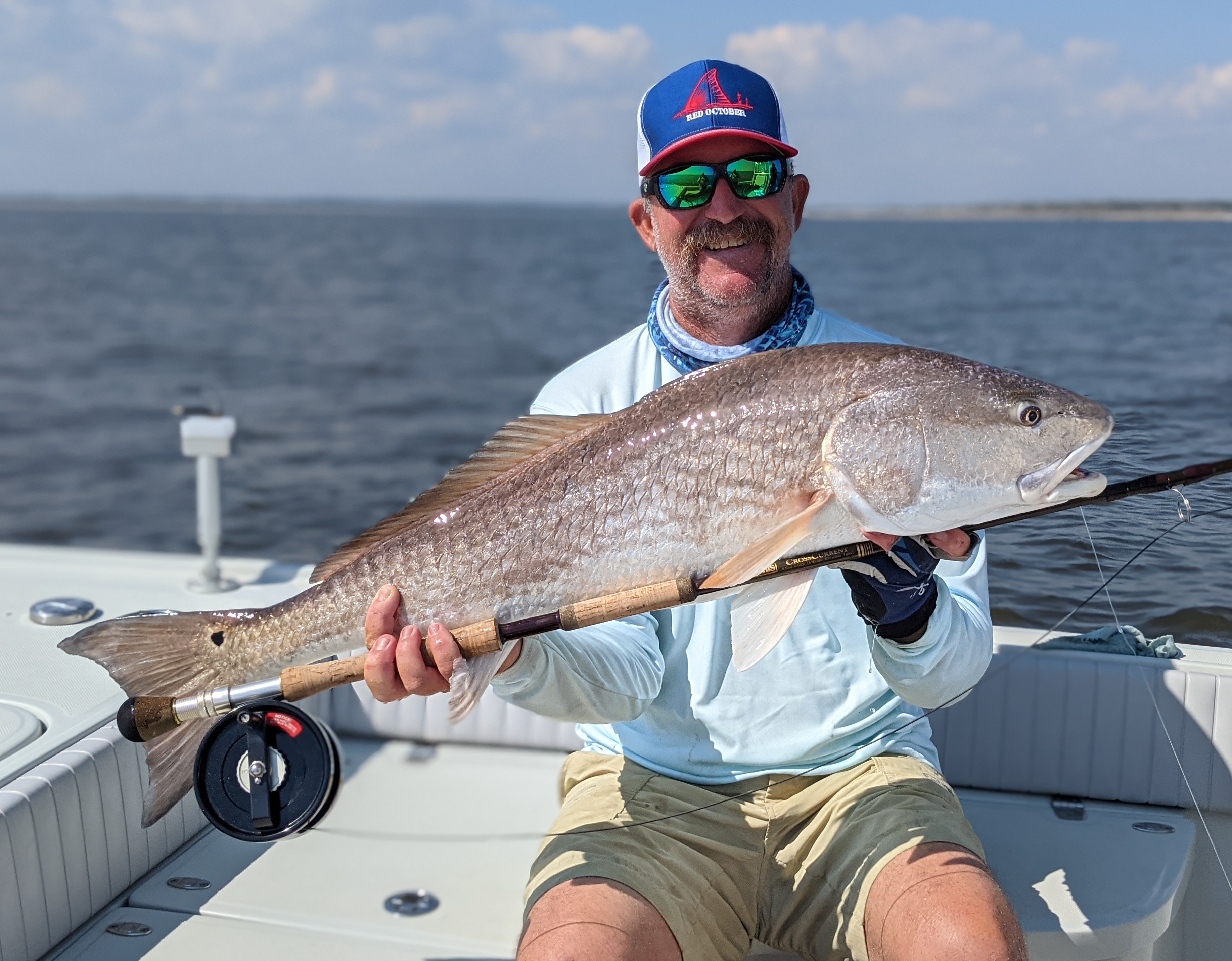
Giant red on
the fly!! | 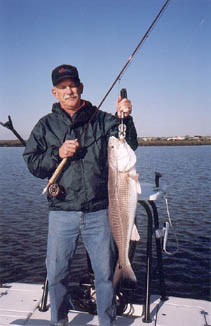
16.5 lb. red on the fly!! | 
Hooked up to a tailing redfish under the old Cooper
River Bridges |
To book a charter please
text 843-509-7337
or
call 843-509-7337 or
email jrwaits@fishcall.com
Stay connected with
Capt. J.R. on social media


NEXT
PAGE>
website designed by Capt. J.R. Waits

|